Lions' Class Summer Term
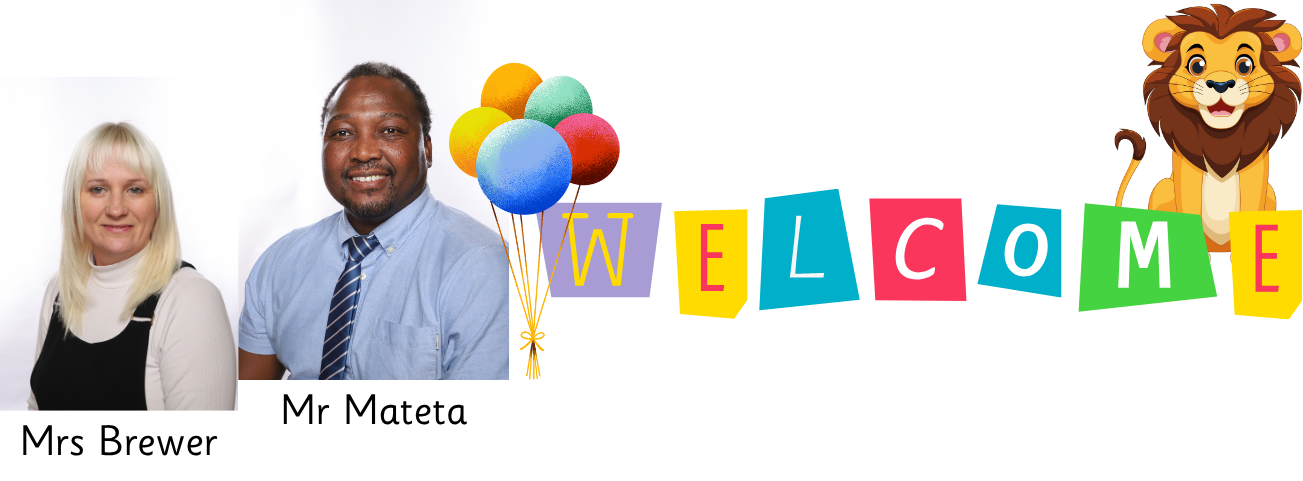
Mr Mateta is our Lions Class Teacher! Mr Mateta is energetic and enthusiastic in everything he does. With a real passion for PE, he loves getting stuck into a game of basketball, while also enjoying a challenge of a good chess match.
Mrs Brewer is the teaching assistant in Lions. She is a mum of 2 boys and loves family fun at the weekends. Mrs Brewer is excited to watch you all grow and make lots of progress across all of your learning.
PE days in Lions are Wednesday and Thursday. Homework is given out on a Friday on Seesaw. Children have a week to complete their homework. Spellings are tested on a Friday and new spellings given. Children can practise their spellings on Spelling Shed.
Geography - Western United States: How does our geography compare?
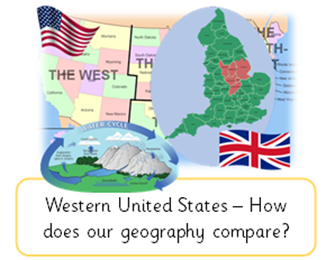
In Geography, children explore the fascinating landscapes of the Western United States while comparing them to the UK and their local area. They deepen their understanding of continents, countries and regions, including North and South America and the structure of the USA. Through this topic, pupils investigate physical features such as rivers, mountains, volcanoes and earthquake zones, as well as climate zones, biomes and vegetation belts. Fieldwork opportunities help children apply their knowledge to real-life environments, such as studying rivers. They also learn about economic activity and the water cycle, developing a well-rounded understanding of how geography shapes people’s lives.
Writing
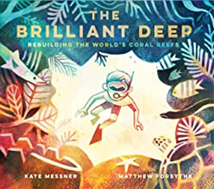 Writing in the Summer Term will be inspired by the books ‘The Brilliant Deep’ by Kate
 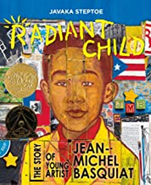 Messner and Matthew Forsythe and ‘Radiant Child’ by Javaka Steptoe. The children will use the fabulous text The Brilliant Deep to write an information leaflet to persuade children to consider the effects of climate change on coral reefs. Furthermore, the children will be inspired by Radiant Child to write an information text about Jean-Michel Basquiat suitable for an art gallery. Throughout our writing, we will continue to develop our grammar, punctuation and spelling through our Gateway, Mastery and Feature keys.
Reading
 Word reading and fluency are developed within each unit through various activities, such as echo reads, timed reads, and fluency grids. Each text includes high-frequency words and a range of common exception words, enabling children to read aloud and understand the meaning of new words they encounter through repeated reading of the text, contiguous reads, echo reads, and the use of the fluency grid. Children will check that the book makes sense to them, discuss their understanding, explore the meaning of words in context, and identify how language, structure, and presentation contribute to meaning. A range of vocabulary-based questions will be used to develop and demonstrate this knowledge. Our year 5 reading, helps develop retrieval skills through diverse texts, teaching children to pinpoint key elements like characters and events. Summarising skills are honed as they identify main ideas from multiple paragraphs. Lastly, children learn to make simple inferences and ask questions to deepen their understanding, reinforcing their analytical skills throughout the reading journey.
Maths
 Our maths in the Summer Term sees the children developing secure understanding across geometry, number and measurement. They begin with Shape, learning to understand and use degrees, classify/estimate/measure angles (including drawing angles accurately and calculating angles around a point and on a straight line), as well as exploring regular and irregular polygons and 3‑D shapes. They then move into Position and direction, where they read and plot coordinates, solve problems with coordinates, use translation, and identify lines of symmetry. In Decimals, children build fluency with decimal sequences, multiplying/dividing by 10, 100 and 1,000, and adding/subtracting decimals (including complements to 1 and crossing the whole). Later units introduce negative numbers (counting through zero and finding differences), converting units (including length, mass and time), and volume (using cubic centimetres, comparing and estimating volume). At home, you can support by encouraging children to explain their thinking, practise quick recall of key facts, and spot maths in everyday contexts (time and turns for angles, grids/maps for coordinates, money and measures for decimals, temperature for negatives, and cooking/DIY for units and volume).
Art – Express Yourself
In Art, children explore how we can express ideas, feelings and identity through creative work. 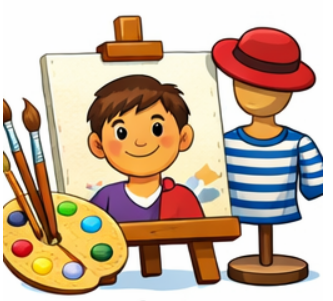 They study how clothing, facial expressions and body language communicate meaning, developing observational drawing skills along the way. Pupils experiment with materials such as wire to create expressive models and explore how line, font and colour can convey mood and messages. They also study artist Chuck Close, learning about his distinctive techniques and applying these to their own artwork to create unique and personal outcomes.
Design and Technology – Structures (Bridges)
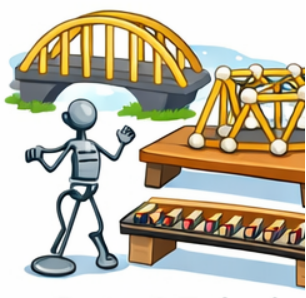 In Design and Technology, children develop their engineering skills through a focus on structures, specifically bridges. They learn about different types of bridges, including arch and beam bridges, and investigate how truss structures provide strength. Through practical challenges such as building spaghetti bridges, pupils explore how to design, test and improve their creations. The unit culminates in a final bridge project where children apply their knowledge to construct a strong and stable structure, developing problem-solving, teamwork and resilience.
Computing – Systems, Searching and Databases
In Computing, children learn how technology supports our daily lives by exploring computer  systems and networks. They discover how computers connect and work together, and how search engines find and rank information. Pupils develop critical thinking skills by considering why some results appear first and how information is selected. In addition, children explore data and information through flat file databases, learning how to collect, organise, sort and analyse data effectively. They use real-world examples to answer questions and present information clearly.
RSHE (Relationships, Sex and Health Education)
Through RSHE, children develop the knowledge and skills needed to keep themselves healthy, safe and emotionally well. They explore how to maintain both physical and mental health, including how technology can impact wellbeing. Pupils learn about online safety, including recognising bullying and understanding how stereotypes can be reinforced online. They also explore important life changes such as puberty and emotional development, helping them to feel confident and prepared as they grow. Sensitive topics are taught carefully, with parents fully informed and supported.
Science – Changing Materials and Human Growth
 In Science, children explore the properties of materials and how they can change. They investigate how mixtures can be separated, how substances dissolve, and how some changes are irreversible. Through practical enquiry, pupils learn how to purify water and explore reactions that produce gases. In addition, children study human growth and development, learning about the life cycle from birth to adulthood. They explore the physical and emotional changes that occur during puberty, helping them to understand how humans grow and change over time.
Religious Education (RE)
In RE, children explore how beliefs about God, the world and other people influence the way individuals live their lives. They consider how religious and spiritual ideas are expressed through art, architecture and acts of charity and generosity. This helps pupils to develop respect, understanding and curiosity about different beliefs and values, encouraging them to reflect on their own views and the world around them.
Music
In Freedom to Improvise, children explore how songs are put together (e.g. verse/chorus/bridge and call-and-response), practise singing in time and on pitch, learn a simple melodic instrumental part (by ear or from notation) and try improvising within a major scale, while also discussing the style and background of the music. In Battle of the Bands!, pupils work as an ensemble to rehearse and perform, making musical choices about elements such as tempo, time signature and key, and developing their own ideas through composing and improvising using a given set of notes.

Physical Education (PE)
 In PE, children develop their physical confidence and coordination through gymnastics, focusing on key skills such as vaults, handstands, cartwheels and round-offs. They also take part in a variety of team sports, including basketball, handball and tennis, both in lessons and through intra-school competitions. These activities promote teamwork, resilience and sportsmanship, helping pupils to stay active and develop a positive attitude towards physical health and wellbeing.
French
 In French, we will build confidence with simple speaking, listening, reading and writing. In Les Jeux olympiques, children learn and practise the French words for different Olympic sports, and they learn how to say what sport someone does using the verb faire (“to do”). They also practise describing Olympians, including choosing the correct word endings for boys and girls. In Les Romains, children learn key French words linked to Roman life (such as baths, aqueducts and roads) and use short sentences to describe what a Roman child wears, eats and does — and what they don’t do using je ne…pas.