Dolphins' Class Summer Term
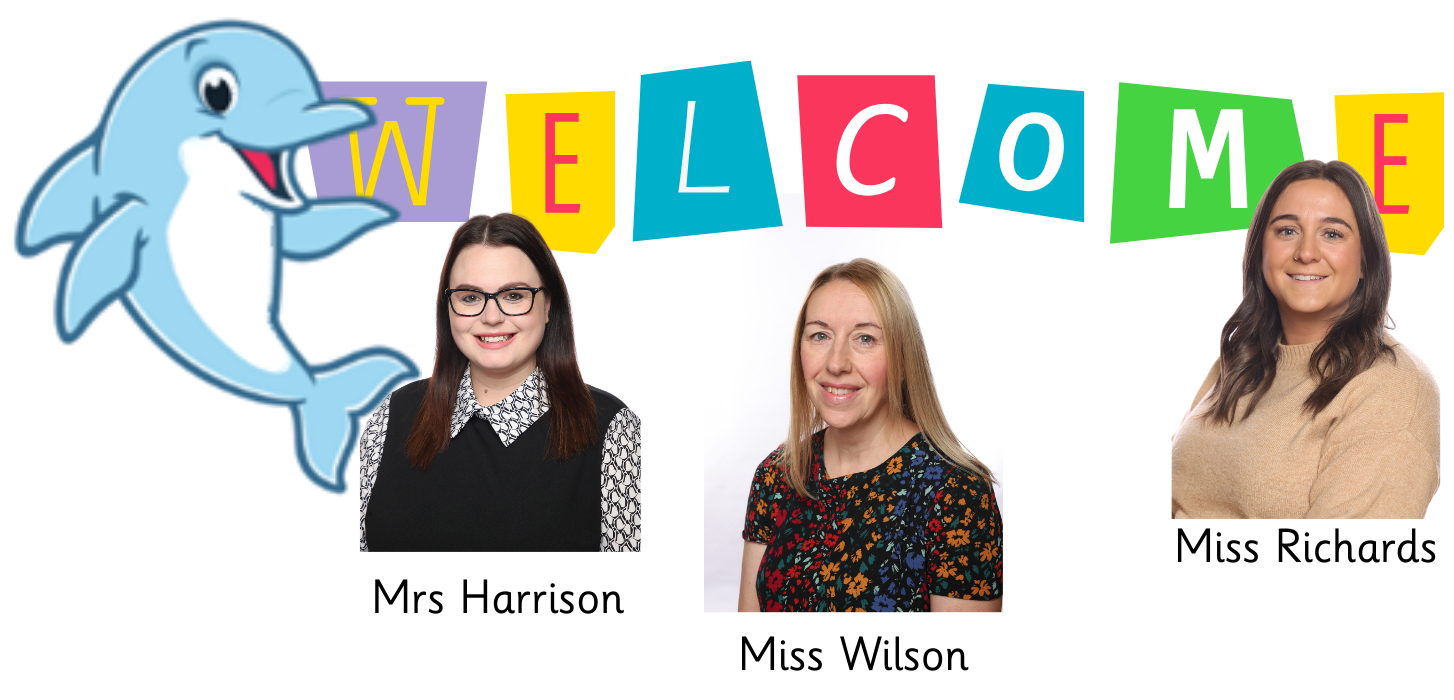
Mrs Harrison is the Class Teacher in Dolphins. Mrs Harrison really enjoys sharing stories and going on adventures. For the Summer Term, Mrs Harrison is really looking forward to learning all about The Great Fire of London. Miss Richards is a teaching assistant in Year 1. She loves to read and spend time with her dog Frank. Miss Richards enjoys teaching phonics and working with the children. Additionally, Mrs Wilson is a Teaching Assistant working in Turtles and Dolphins. She enjoys going for long walks, live music and being at the seaside. Mrs Wilson is looking forward to working with all the lovely year 1 children this year. Lucky Dolphins also get Mrs Hawkins. Mrs Hawkins works in Dolphins, Turtles and Penguins Class. Mrs Hawkins really enjoys teaching RSHE, Music, Maths and reading stories. In her spare time, Mrs Hawkins loves to spend time with her family and go on lovely long walks.
PE in Dolphins is on Tuesdays and Wednesdays.
History
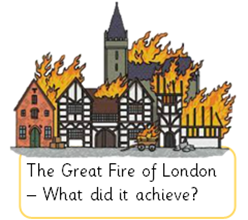 In History this term, children will learn about The Great Fire of London and explore what life was like in 1666. They will discover how the fire began on 2nd September, how it quickly spread through the city and how we know about these events today. Children will learn about the damage the fire caused and what remained afterwards, before exploring how London was rebuilt in safer ways. Finally, they will consider how the fire changed the future of the city, helping to make London stronger and better prepared.
Writing
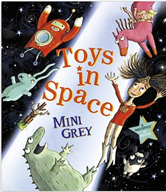 Our children will begin their Summer Term writing journey by exploring the book 'Toys in Space' by Mini Grey. Our second text is 'Goldilocks and Just the one Bear' by Leigh Hodgkinson. Using the first text we will be creating our own story and the second text will inspire us to write a report about bears. We will be working on combining words to make sentences, leaving spaces between words, using capital letters and full stops and the use the capital letters for the names of people and the personal pronoun 'I'. Additionally, we will be introducing suffixes and prefixes.
Maths
 During the summer term, learning focuses on multiplication and division (including counting in 2s, 5s and 10s and making equal groups), followed by fractions such as halves and quarters. Our children also explore position and direction using mathematical language, and extend their place value understanding to numbers within 100. The term ends with practical topics of money and time, including recognising coins and telling the time to the hour and half past, while continuing to build fluency, reasoning and problem-solving skills.
Reading
 Summer term sees us embedding and gap filling our phonics as well as working on our phase 5 tricky words to get us ready for Year 2! Additionally, we will begin to work on our comprehension skills in a more formal way. We will read and share texts and answer retrieval and inference questions.
Geography - Fieldwork
Our local park, will be the focus of our geography fieldwork. We will look at how people travel to the  park and what facilities our local park has. We will also consider how we can collect and present data about these facilities.
Art
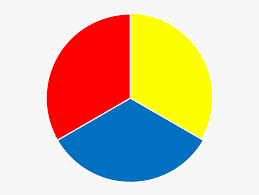 In our Colour Creations work children will develop their understanding of colour through a range of practical and creative activities. They begin by identifying a variety of colours and the objects associated with them, before learning to recognise primary colours and experiment with mixing these to create secondary colours. The children then explore how to create different shades by adding light and dark tones. The unit culminates in children producing their own artwork inspired by Wassily Kandinsky, using their knowledge of colour mixing and application to create expressive pieces.
Design and Technology
Textiles – Puppets - The children learn simple sewing skills by joining fabrics and designing their own puppet. They then make and decorate their puppets using a range of materials.
Mechanisms – Wheels and Axles - Pupils learn how wheels and axles work by exploring movement  and fixing problems. They design and make a simple fire engine, then test how well it moves through fun activities.
Computing
 Data and Information – Grouping Data - The children will learn how to sort and group information by labelling, counting and describing objects in different ways. They explore how objects can be grouped by their properties, compare different groups and begin to answer simple questions about the data they have collected.
Creating Media – Digital Writing - The children will learn to use a computer to write by typing and editing text. They explore how to change the appearance of their writing and make simple choices about formatting. Pupils also begin to explain their choices and compare typing on a computer with writing on paper.
Religious Education
 In our RE lessons, the children will learn about important symbols, artefacts and places of
 worship in Christianity and Judaism, including churches and synagogues. They explore how these religions worship and celebrate, comparing similarities and differences such as weddings and the use of symbols, and reflect on why people may or may not attend a place of worship. Pupils also learn about the Jewish festival of Shabbat, understanding that it is a special weekly day of rest and worship when families come together to celebrate and remember what is important to them.
Science
In science, we will explore the natural world around them through three key areas. They begin by observing seasonal changes, noticing how their environment changes from winter to early summer, including differences in  weather, plants and daylight. We then learn about animals, focusing on vertebrates such as birds, fish, amphibians and mammals, and identifying their key features and similarities. Finally, the children study plants, identifying common wild and garden plants and learning about the parts of a plant, including those that grow above and below the ground, and how plants can be similar or different.